


Keep Recyclables Organised with Recycling Material Storage Units
Streamline your recycling operations with robust, flexible, and rapidly deployable storage structures.
Recycling is more than a sustainability initiative, it’s a legal and operational necessity for many commercial properties across the UK. Whether you’re managing a large industrial estate or a logistics centre, the volume and variety of recyclable materials produced can quickly become unmanageable without the right infrastructure in place. That’s where recycling material storage units come into play.
Well-designed storage units ensure everything from paper and plastic to metal and aggregates is sorted, protected, and stored correctly. This not only helps businesses stay compliant with environmental regulations, but also improves on-site efficiency, reduces cross-contamination, and can even reduce waste collection costs.
McGregor Opus offers durable and re-deployable recycling and aggregate storage bays designed specifically to meet these needs, especially for businesses dealing with loose recyclables or requiring weather-protected bays. In this guide, we’ll explore practical strategies to organise recyclables more effectively using recycling storage units, and show how McGregor Opus supports long-term waste management success.

How does recycling material storage units keep recyclables organised?
Implementing a First-In, First-Out (FIFO) system
By rotating your recycling inventory so that the oldest materials are processed or collected first, you prevent overflow and avoid degradation. FIFO systems are particularly useful for businesses with high recycling volumes. Recycling storage units should be laid out to facilitate easy access from both ends or have signage to guide employees. This reduces confusion and ensures a smoother recycling flow without blockages or piles of forgotten waste.

Incorporating easy access for collection vehicles
No matter how well-organised your internal recycling system is, inefficiencies during collection can cause disruptions. Recycling material storage units should be located and spaced with vehicle access in mind. Aisles wide enough for forklifts or refuse trucks, combined with open-ended or roll-up bay access, save time and reduce the risk of delays. This leads to a more consistent recycling routine and helps meet pickup schedules without disruption.

Using modular layouts to scale with site demand
Recycling demands can grow quickly, especially during peak production periods. Opting for modular storage layouts means you can add or rearrange units easily as your recycling needs change. Modular recycling storage solutions let you respond to operational shifts without large-scale redesigns or permanent construction. This adaptability is ideal for commercial properties where space and requirements evolve with contracts, tenants, or seasonal demand.
Maintaining clean, well-ventilated storage areas
Ventilation is key when storing materials like food containers or organics, which can quickly develop odours or attract pests. Recycling storage units with natural airflow or integrated ventilation features help maintain a cleaner environment. Regular cleaning, pest-proofing, and clear visibility into each bay support a more sanitary site. Well-maintained areas are also easier to audit for compliance and give staff confidence in handling waste correctly.

FAQs
Yes, McGregor Opus structures are re-deployable, which means they can be disassembled, relocated, and reinstalled at different commercial locations. This flexibility is ideal for companies operating multiple sites or adapting to changing recycling requirements without investing in permanent infrastructure.
Absolutely. While originally engineered for aggregate storage, the Opus system is equally effective for other recyclables such as metal, plastic, cardboard, and wood. Its moisture-resistant, enclosed design helps maintain material quality and supports responsible on-site recycling practices.
How McGregor Opus supports smarter recycling storage
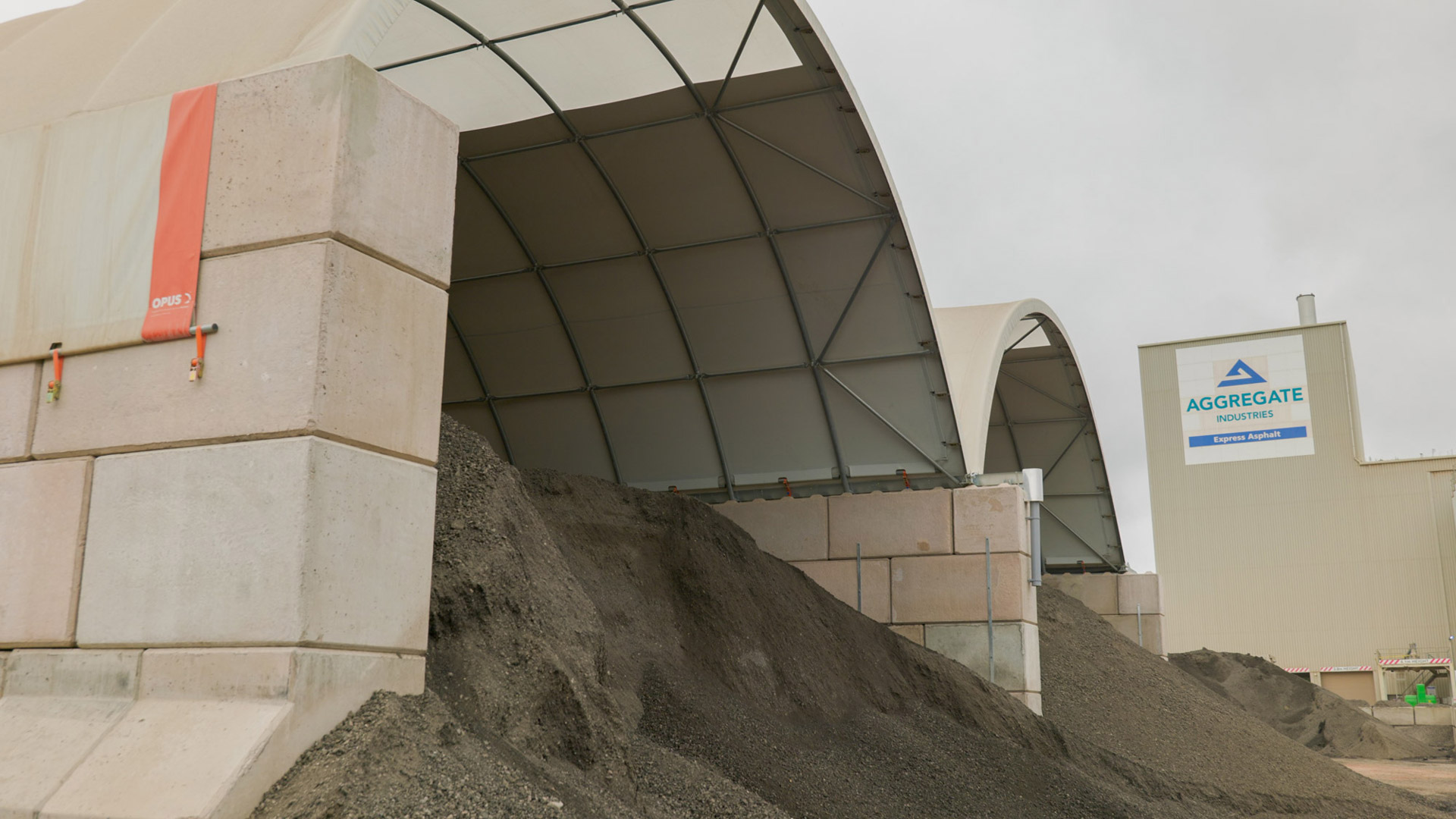
McGregor Opus is a fabric structure engineered to connect seamlessly with Legato concrete blocks, forming enclosed aggregate storage bays ideal for holding large volumes of recyclables. Here’s how its key features make it an excellent choice for commercial properties seeking reliable recycling material storage.
Modular design for scalable storage
The Opus system allows you to create a single or multi-bay structure tailored to your recycling output. As your operations grow or contract, more bays can be added or removed without the need for costly redesigns. This flexibility helps businesses scale up recycling efforts without investing in permanent buildings, making it a cost-effective approach for long-term site development.
Safe and predictable construction
Opus is built to standardised product dimensions, meaning McGregor’s experienced teams assemble the same configuration repeatedly with minimal variation. This streamlined approach ensures safe and fast installation, vital for busy commercial sites. The consistent build quality also allows for ongoing maintenance to be handled efficiently, reducing downtime and operational risk.
Dry and controlled environment
Moisture control is a major concern in recycling. Opus addresses this with a combination of smart design elements: a gable vent system, tensioned waterproof side skirts, and deep-section steel gutters. These features keep materials dry and well-aired, reducing mould, odours, and spoilage. Controlled airflow also helps avoid condensation build-up, which is critical for long-term recyclables.
High-level protection & durability
Built with heavy-duty 76.2mm MagnaTube steel, Opus structures meet European standards for wind and snow loading, BS 6399-2:1997, BS 6399-3:1988, and BS EN 13782:2005. This makes them suitable for the UK's harsh weather conditions, offering reliable protection. Whether installed at a coastal depot or inland processing site, your recyclables stay safe from the elements and structural fatigue.
Re-deployable across multiple sites
One of Opus’s features is its re-deployable nature. Unlike permanent buildings, these structures can be dismantled and moved to new locations as business needs change. This is ideal for commercial properties managing multiple recycling hubs or adjusting operations based on new regulations or service contracts. McGregor ensures that each unit is manufactured for swift delivery and fast setup.
Contact Us Now
Get in Touch Today
If you have a question, please fill out the form below or call us. Our client services team will help you.
SOCIAL